Batis Exchange
- +1 (416)-848-4849
- 2354A Yonge St, Unit 1 (2nd Floor) Toronto, ON M4P 2E6
- info@batisfinancial.com

Batis Exchange
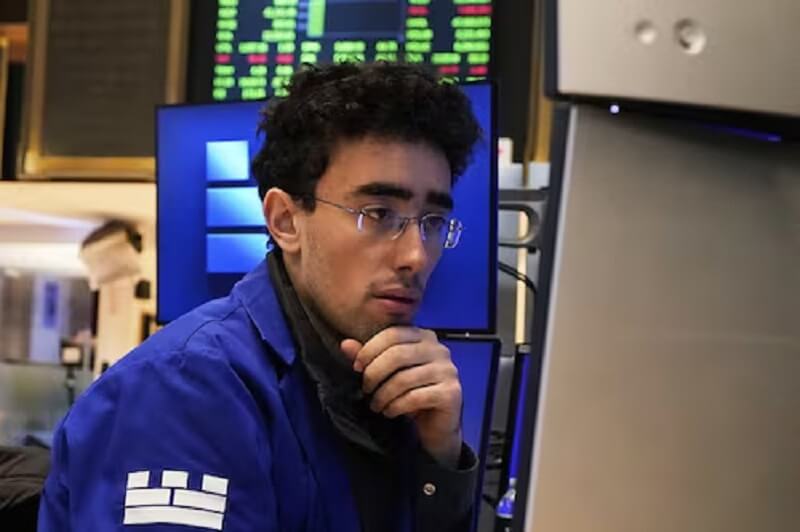
Investors are navigating a growing number of potential shocks as volatility persists, with risks spanning geopolitics, currency dynamics and asset valuations. A new framework highlights how several “wildcards” could quickly shift the trajectory of global markets.
BNN Bloomberg spoke with Dan Tobon, head of G10 FX strategy at Citi, who outlined nine key scenarios to watch, with risks tied to global fragmentation, artificial intelligence disruption and shifting investor sentiment gaining urgency.
Key Takeaways
LINDSAY: Markets are navigating an unusually wide range of risks right now, from rising geopolitical tensions to concerns about asset bubbles and the impact of AI. Our next guest has laid out nine key wildcards that investors should be watching closely, with many of them coming into sharper focus in the near term.
Joining us now to break it all down is Dan Tobon, head of G10 FX strategy at Citi. It’s good to have you join us. Thanks so much.
DAN: Thanks for having me.
LINDSAY: So, nine wildcards. You’ve divided these into three central themes. What are those themes, and which one is the greatest risk at the moment?
DAN: Yes, we pretty much found — and it wasn’t intentional — we came up with nine individual wildcards, but we realized a lot of them really fell into three buckets. Five of the nine fall into what I’d call the shift from a unipolar world to a multipolar world. You can think of that as greater global fragmentation and increased geopolitical pressure.
One of the risks in that bucket was increased military tensions involving Iran. This note actually came out a week before the U.S. started its campaign in Iran, which shows these are low-probability, high-impact events that are meant to be timely — based on what’s happening right now.
Another example is the idea that the U.S. could stop exporting oil, or even put pressure on the broader Americas to restrict exports. That could keep U.S. prices lower relative to the rest of the world. You’re already seeing some of that dynamic in the Brent-WTI spread.
I think that theme is the most in focus right now, and where one wildcard can make others more likely.
LINDSAY: Some of these themes raise the question — are investors underestimating how disruptive rising U.S.-China tensions, as well as U.S.-Europe tensions, could be?
DAN: I think it’s difficult in terms of market pricing because these are risks that are hard to quantify in a fundamental forecast. Whether tensions translate into weaker growth or earnings often depends on the commodity shock.
It’s not always a direct link — higher tensions don’t automatically mean stocks go down. But when you start to see higher commodity prices or higher yields tied to concerns like a foreign buyer strike in U.S. fixed income, the longer those persist, the more real economic impact they have.
It comes down to duration and severity. We saw that with tariffs — the impact can be muted at first, then become significant over time. I’d say markets are probably quite optimistic relative to the risks that could emerge.
LINDSAY: You’ve also outlined AI hitting the credit sector as a potential issue. Why could AI be dangerous in that sense?
DAN: We’ve been seeing a repricing in software, which is a large part of the high-yield credit market and parts of private credit. The big unknown is how disruptive AI will be to software.
From a credit perspective, that matters because recovery rates could be much lower. If a company fails, traditional assets can be sold, but software is largely intellectual property. You might recover far less — maybe 10 cents on the dollar — or much more. There’s a wide range of outcomes.
We’re somewhat more sanguine in the sense that disruption will likely take time. It’s not clear everyone can replace these systems overnight. But this is increasingly a bottom-up story — some companies will be heavily disrupted, others less so.
LINDSAY: Another wildcard is a bursting AI bubble and aggressive Federal Reserve cuts. How likely is that, and how could the Fed respond?
DAN: Our base case is still constructive — capital spending should support earnings, and we see a broadening cycle. We remain positive on equities and AI as a theme.
But sentiment matters. If investors pull back and we see a sharp unwind, that becomes a real risk. It’s still a tail risk, but that risk has grown with rising geopolitical tensions and growth uncertainty.
The Fed’s response would depend on whether this affects growth and spending through a wealth effect. Historically, the Fed has responded to that. The challenge would be if this happens alongside high inflation driven by a commodity shock — that would complicate policy decisions.
If it’s purely a growth issue, you could see more aggressive rate cuts, especially depending on leadership at the Fed and their policy bias.
LINDSAY: Lastly, you flagged the perception of a foreign buyer strike as a risk. Even if unlikely, how dangerous is that narrative?
DAN: It can be quite powerful. If it’s driven by narrative rather than fundamentals, it may be shorter-lived, but it can still move markets.
There is concern among global investors about U.S. assets, largely based on fears that others might sell. We think a broad shift away is unlikely due to a lack of alternatives.
But the fear alone can cause volatility. We’ve seen spikes in yields and weaker auctions tied to that perception, even when data showed foreign investors were still buying.
So the bigger risk is sentiment rather than actual flows. That sentiment can shift quickly, especially in an uncertain policy environment.
LINDSAY: We’ll have to leave it there. Thanks so much for the insight. Dan Tobon, head of G10 FX strategy at Citi. Reference


