Batis Exchange
- +1 (416)-848-4849
- 2354A Yonge St, Unit 1 (2nd Floor) Toronto, ON M4P 2E6
- info@batisfinancial.com

Batis Exchange
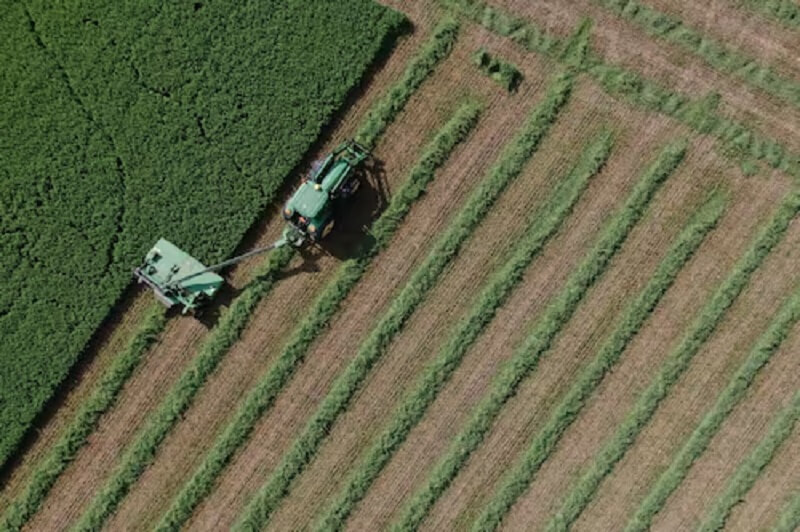
Canadian farmland values continued to rise in 2025, extending a decades-long trend supported by strong demand and limited supply.
BNN Bloomberg spoke with Justin Shepherd, senior economist at Farm Credit Canada, who said regional differences remain significant, with Prairie markets leading gains while profitability faces pressure from rising input costs and geopolitical disruptions.
Key Takeaways
ROGER: Trade uncertainty and higher input costs are not holding back the rise in Canadian farmland values, according to a new report by the Crown corporation Farm Credit Canada. This trend has now continued for more than three decades, but profitability could be challenged by ongoing events in the Middle East. For a more detailed look at Canada’s farmland market, covering more than 93 million acres of crops, we’re joined by Justin Shepherd, senior economist at Farm Credit Canada. Justin, thanks very much for joining us.
JUSTIN: Yeah, good morning, Roger.
ROGER: It’s quite the run. I mean, we look at other forms of real estate — obviously this is different — but still, three decades of increases in values. What is driving that, and where is the money coming from?
JUSTIN: Yeah, when we look at Canada, we’ve seen those increases over the last three decades. But when we start digging down into provinces and then smaller regions, we see a lot more variability. So while farmland grew 9.3 per cent again in 2025 — the same as in 2024 — different regions and provinces had very different outcomes. Some remain strong, especially in the Prairies, but areas like Ontario and Quebec saw growth slow.
ROGER: And what was the difference between those areas? Why the discrepancy? And B.C., I think, was even negative last year.
JUSTIN: Yep, we saw a slight decline in B.C., but that’s after strong growth the year before. So there’s some up and down in British Columbia. In the Prairie land market, there’s a fairly limited amount of land that comes up for sale each year — it tends to be a supply issue. On the demand side, we’re still seeing producers with strong risk management looking to expand. There are still good opportunities for those producers. In Ontario, we had stronger growth three or four years ago, so that has slowed a bit, but we’re still seeing positive growth overall.
ROGER: And with this three-decade run — I’m still fascinated by the continuous growth — was it undervalued years ago and is now catching up, or are people realizing there’s money in this?
JUSTIN: Yeah, 30 years ago, we were coming out of the 1980s, which was a really challenging period for agriculture. The early ’90s is where the land market hit a bottom, and since then we’ve seen farmland values grow very consistently. Part of that is due to production methods — things like zero-till farming, which allowed producers to move away from summer fallow, meaning land that wasn’t farmed every year. Now, with new technologies, producers can grow crops annually. We’ve also had strong markets, especially since the early 2000s, when the U.S. Renewable Fuels Standard supported demand. So it’s been a gradual but consistent increase.
ROGER: This year, there are some challenges with fertilizer and fuel. What kind of pressure will those put on?
JUSTIN: Yeah, producers are concerned as we get close to planting season — maybe six weeks away in some regions. Some locked in input costs last fall, so they may have a different outlook. But for others, especially with fuel, which is harder to lock in, costs are rising. We’re seeing tighter margins across grains and oilseeds across the country, regardless of region. We expected tighter margins even before the Middle East conflict escalated. Producers are also seeing some higher commodity prices — for example, canola is up over the past month — but there is definitely concern about input costs.
ROGER: And who’s buying the land? Are we seeing smaller farmers disappearing with these prices?
JUSTIN: We don’t have a perfect data set coast to coast — each province is a bit different — but generally, producers are still the main buyers of farmland in Canada. They tend to have the strongest incentive and ability to expand, so most farmland is still being purchased by local farmers.
ROGER: Are we starting to see REITs — real estate investment trusts — show up and buy land?
JUSTIN: Each province has its own rules on investment, whether foreign or domestic. But there is always interest from groups like that, given farmland has been a relatively stable investment over the past three decades.
ROGER: Is there any more room for growth in terms of land, or have we largely used all the arable land available?
JUSTIN: It’s pretty limited at this point. We’ve seen some increases in cropland over the past 20 years, according to the census, but much of that comes from shifting land use, like reducing summer fallow. Overall, the total land base has been fairly flat.
ROGER: So it’s flat farmland — sorry, a bit of a joke there. So is science the next step, improving crop yields? Is Canada leading there?
JUSTIN: Canada has had strong productivity growth over the past 30 years. It has slowed somewhat, like in many sectors, but we’re still comparable to the U.S. A lot of productivity gains globally are now coming from places like Brazil and Argentina.
ROGER: We’ll have to leave it there. Justin, thanks very much for joining us.
JUSTIN: Thanks for having me.
ROGER: Justin Shepherd is senior economist at Farm Credit Canada. Reference


